
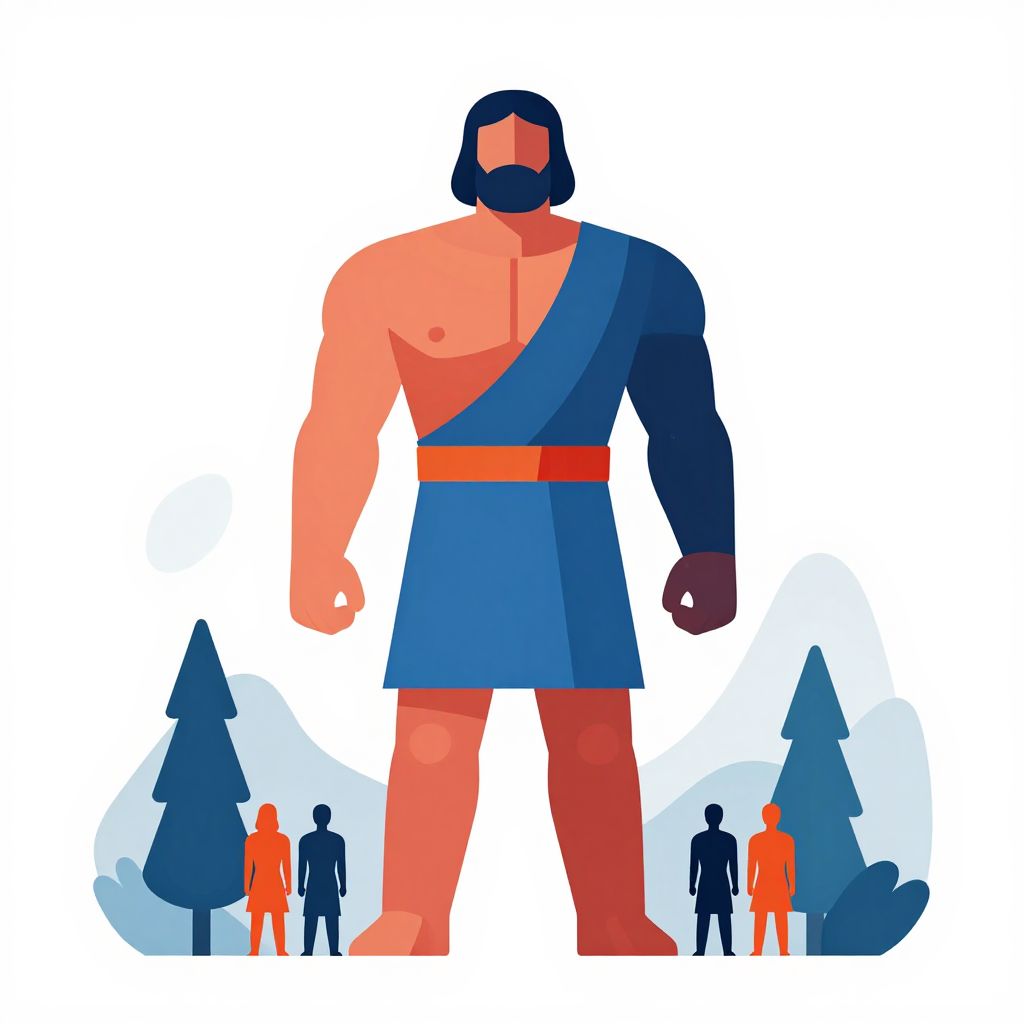
Have you ever found yourself gazing up at a towering structure and wondering about the legends of giants that once walked this earth? Many people grapple with the tale of giants in the Bible, particularly when it comes to their size. These stories can evoke both curiosity and confusion, leading us to question their significance. Understanding the giants helps us appreciate God’s Word and the lessons hidden within these ancient narratives.
This article explores the height of the biblical giants and delves into their significance in Scripture. Specifically, we will focus on several key figures, examining their importance and the implications for our spiritual lives today.
How Tall Were The Giants In The Bible?
The giants mentioned in the Bible are often described as being **much taller than average humans**, with heights generally reported to be around **9 to 13 feet** tall. The most notable giants include Goliath, who measured approximately **9 feet 9 inches**, and the Nephilim, whose dimensions remain speculative but were certainly immense.
The Nephilim: A Mysterious Race
The Nephilim are first mentioned in Genesis 6:1-4. They are often described as the offspring of the “sons of God” and the “daughters of man.”
- Genesis 6:4 (ESV): “The Nephilim were on the earth in those days, and also afterward, when the sons of God came in to the daughters of man and they bore children to them.”
Much debate exists about the identity of the “sons of God.” Some believe they were fallen angels, while others suggest they were the godly line of Seth intermingling with Cain’s descendants. Regardless, the **descendants** referred to as Nephilim clearly represent a group identified by their stature and strength.
The Height Speculations
While heights are not directly recorded in Scripture for the Nephilim, ancient texts and Jewish tradition suggest they were extraordinary in size. Some early translations estimated their height to be around **30 cubits**, which could translate into roughly **45 feet**—though this is highly debated and likely exaggerative.
Emphasizing the sheer size of the Nephilim allows us to consider God’s providential means. They represent a challenge and a symbol for the people of God. Rather than focusing on their stature, focus on what God accomplished despite their presence.
Goliath: The Giant of Gath
Goliath stands out as the most recognized giant in the Bible. In 1 Samuel 17, his height is explicitly mentioned, estimated at **six cubits and a span**, approximately **9 feet 9 inches** tall. His formidable presence and intimidation defined him as the champion of the Philistines.
- 1 Samuel 17:4 (ESV): “And there came out of the camp of the Philistines a champion named Goliath, of Gath, whose height was six cubits and a span.”
Goliath’s bulk was matched by his armor, which intensified his fearsome persona. The challenge he posed was not only physical but spiritual, demanding that the Israelites trust God’s power over the might of the enemy.
The Symbolism of Giants
When contemplating giants in Scripture, consider their symbolic implications rather than just their physical dimensions. Their towering presence represents the **obstacles** believers might face today, both personally and communally. Giants often depict fears, doubts, and trials that seem insurmountable.
How can we approach our “giants” today? What are the strongholds in your life, standing against your faith? Recognizing these realities can help a believer lean more into faith and less into fear.
God’s Sovereignty Over Giants
Concerning giants, we can’t overlook the thematic assertion of God’s **sovereignty**. For David, facing Goliath represented a moment of faith-filled courage—that God could defeat what seemed unapproachable. David did not depended on his own strength but rather on God’s faithfulness.
- 1 Samuel 17:45 (ESV): “Then David said to the Philistine, ‘You come to me with a sword and with a spear and with a javelin, but I come to you in the name of the Lord of hosts, the God of the armies of Israel, whom you have defied.’”
The Bible’s Perspective on Fear
Giants can teach us about facing fear. David’s confrontation portrays how trusting in God’s power can lead to victory b resolving internal battles. We can see ourselves in David—small and seemingly powerless, yet empowered by the Lord.
Facing fear through faith brings us to the heart of what faith is all about. Every giant we confront today shines a light on our need to turn to God through prayer and reliance on His strength.
The Cultural Context of Giants
The giants in the Bible also connect us to diverse **cultural myths** and traditions. In ancient Near Eastern lore, tales of giants abound and serve as reflections of human fears and aspirations.
Comparative Mythology
By examining cultural references, we can observe parallel narratives. Ancient Sumerian and Babylonian texts refer to giants representing gods and heroes. These stories often reflected human struggles against perceived monsters and challenges—and evoke the same themes of triumph through strength either divinely given or humanly acquired.
These interconnections invite reflection. What cultural “giants” do we confront today? They might not be towering figures; instead, they could be societal issues, division, or personal struggles.
Theological Insights
From a theological standpoint, these narratives compel the faithful to recognize God’s creativity and the multidimensional aspects of humanity’s complexity. The existence of giants emphasizes God’s dominion over creation; He remains supreme above all divisions and fears.
- Responding to **cultural giants** reveals a relatable challenge in our spiritual walk.
- It invites believers to pursue truth and resist that which distracts from God’s promise.
Lessons from the Giants
Encountering the giants offers vital lessons for our spiritual journeys. Each narrative does not merely serve as story fodder; rather, they are instructional pathways for understanding God’s character and expectations from His people.
The Challenge of Trust
Every giant presents a challenge of trust in God’s provision. When times are tough, it’s easy to focus on the size of the issue rather than the greatness of God. Just as David operated from a place of faith, we too are called to action through reliance on our Creator.
Victory Through Faith
The biblical giants demonstrate that victory does not depend on human ability alone. God’s power thrives where human limitations abound. If Goliath evokes fear, God’s triumph in that battle reveals His faithfulness to His people.
Overcoming Obstacles
Every life obstacle can be considered a giant. We are reminded to approach these moments in prayer and with expectation. The real victory lies in how we face giants, which map back to a faith dependent on the Lord. How can that change your outlook on your current struggles?
Applying the Truth Today
Recognizing the biblical giants and their stories elevates our understanding of how they influence our journeys today. They compel us to prayerful introspection and personal application.
Identifying Your Giants
This process begins by identifying personal giants. Do you feel overwhelmed by fear, insecurity, or a sense of defeat? Mapping those giants gives you clarity on where to direct your prayers.
Journaling can be a helpful practice here. Write down what feels insurmountable and reflect on God’s promises related to those fears.
Creating a Battle Plan
Once you recognize your giants, it’s time to develop a **battle plan** supported by Scripture. Arm yourself with verses that strengthen faith. Here are some key passages to consider:
- Isaiah 41:10 (ESV): “Fear not, for I am with you; be not dismayed, for I am your God; I will strengthen you, I will help you, I will uphold you with my righteous right hand.”
- 2 Timothy 1:7 (ESV): “For God gave us a spirit not of fear but of power and love and self-control.”
Walking in Faith
Your walk in faith leads the way as you confront giants. Every step forward demonstrates reliance on the Lord rather than personal strength. Being proactive in prayer fortifies your belief that God equips His children to face any challenge.
Community Support
Giants remind us that we are not alone in our battles. Tackle challenges in the community. Surrounding ourselves with fellow believers provides strength, accountability, and encouragement.
Encouragement Through Fellowship
Share your struggles with a trusted friend or family member. Developing a circle of faith helps combat anxiety. Verse-sharing,