
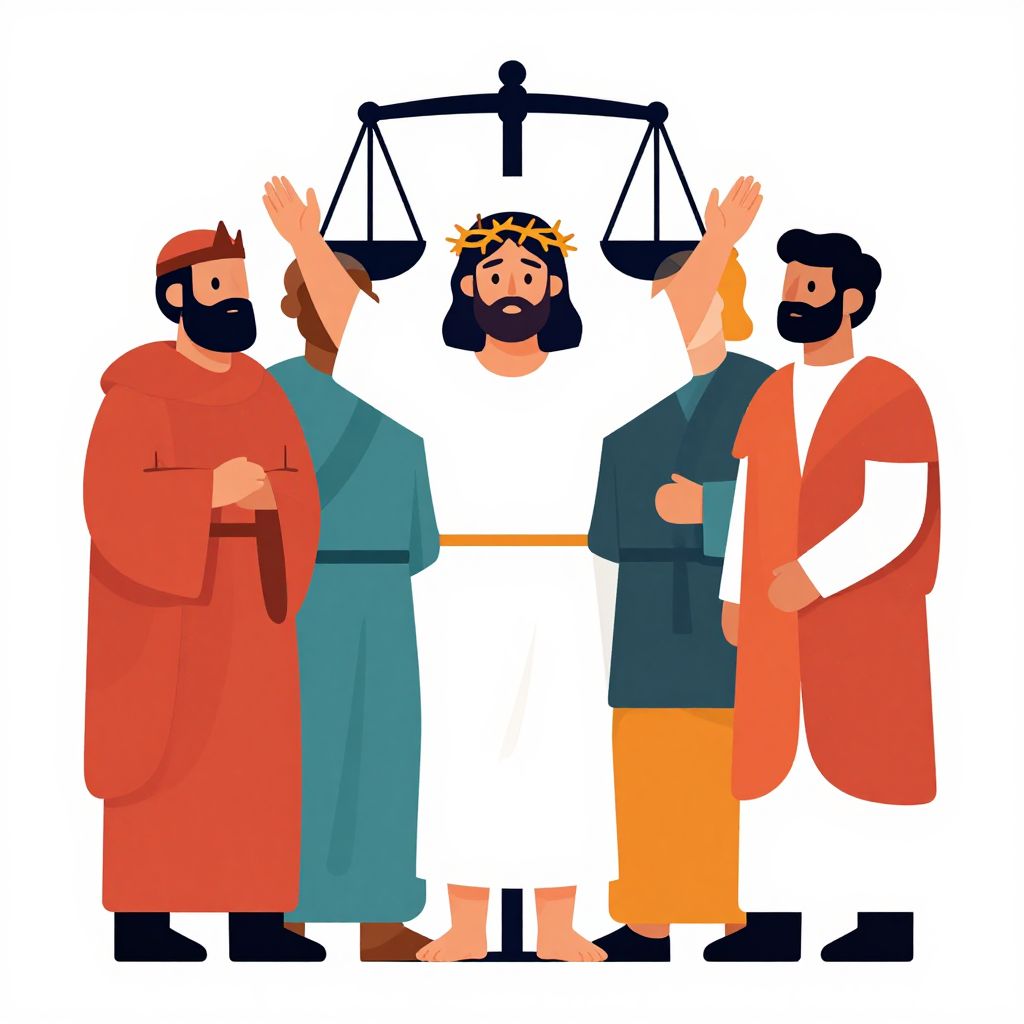
Have you ever wrestled with the weight of betrayal, and wondered how someone could turn against love so fully? The Gospels recount the harrowing moment when Jesus, the embodiment of love and grace, faced condemnation and rejection. This pivotal event not only alters the course of history but also reveals profound truths about human nature, divine love, and the calling we each have as followers of Christ.
Understanding why Jesus was condemned to death sheds light on God’s redemptive plan. In this article, we’ll explore the events leading to Jesus’ crucifixion, the significance of His unjust condemnation, and how this truth shapes our lives today.
Jesus Is Condemned To Death?
Jesus faced condemnation due to His radical teachings, claims of divinity, and challenge to religious authorities. As the Son of God, His mission was to reconcile humanity to the Father. This confrontation led to His trial, ultimately resulting in a death sentence fulfilled through crucifixion (John 19:16).
The Context of Condemnation
Understanding the context of Jesus’ condemnation requires reflecting on the socio-political landscape of His time. Jesus grew up under Roman authority, amidst Jewish authority that was both religious and cultural. Tension escalated as Jesus performed miracles, healed the sick, and proclaimed the Kingdom of God.
His actions were not only disruptive but also posed a threat to the established order. Religious leaders, feeling threatened, sought to silence Jesus. This dynamic illustrates the struggle between light and darkness, truth and deception. The Gospel of John outlines this ongoing conflict (John 1:5).
Who Were the Accusers?
The primary accusers of Jesus were the religious leaders of His day, the Sanhedrin. They consisted of Pharisees, Sadducees, and scribes, deeply invested in maintaining their power and tradition. Jesus challenged their interpretations and practices, calling for a deeper, more profound faith (Matthew 23:27).
In John 11:47-53, religious authorities convened to discuss how to eliminate Jesus, fearing His growing influence. They plotted against Him, viewing Him as a threat to their authority rather than a Messiah who fulfilled their Scriptures.
The Trial: A Mockery of Justice
The trial of Jesus exemplifies the miscarriage of justice in a profound way. Jesus was arrested at night, a practice strictly forbidden in Jewish law for capital cases. His trials were marked by contradictions and false witnesses (Matthew 26:59-60).
Before Caiaphas, the high priest, Jesus faced accusations of blasphemy for claiming to be the Son of God. This charge incited outrage among the leaders, paving the way for His condemnation (Mark 14:61-64). The religious leaders sought a death penalty that they did not have authority to impose under Roman law, prompting them to bring Jesus before Pilate.
Why Pilate? The Roman Influence
When Jesus appeared before Pilate, the Roman governor, political dynamics shifted. Pilate recognized Jesus’ innocence but feared the crowd’s outrage (Luke 23:14). His struggle culminated in a tragic yet revealing declaration, “What is truth?” (John 18:38).
Pilate chose to placate the crowd rather than uphold justice. He famously washed his hands of Jesus’ blood, yet no amount of water could cleanse him of such a grave decision (Matthew 27:24). This moment emphasizes the peril of human authority in the face of divine truth.
Crowd Mentality: Choosing Barrabas
Amidst the trial, Pilate offered the crowd a choice between Jesus and Barrabas, a notorious criminal. The Gospels show how the crowd, swayed by the chief priests, chose Barrabas (Matthew 27:21).
This decision symbolizes the rejection of goodness for the sake of familiarity and comfort. The crowd’s shouts of “Crucify Him!” echo the temptation to forsake righteousness when confronted with the unsettling presence of truth.
The Actual Condemnation
After Pilate’s futile attempts to release Jesus, he gave in to the crowd’s demands. Jesus received the sentence of crucifixion, marked by extreme humiliation and suffering. Roman crucifixion was brutal, designed to publicly display the consequences of rebellion.
As scripture foretold, this fulfilled prophetic words, including Isaiah 53:5, which states, “He was pierced for our transgressions, he was crushed for our iniquities.” This act did not merely showcase Roman might, but reflected God’s plan for salvation through suffering.
Theological Significance of the Condemnation
At the heart of Jesus’ condemnation lies a deep theological truth. His death serves as the ultimate sacrifice for humanity’s sin. Romans 5:8 reminds us, “But God demonstrates His own love for us in this: While we were still sinners, Christ died for us.”
This profound act highlights God’s love and mercy. Jesus willingly stepped into the role of the atoning sacrifice, taking upon Himself the sins of the world. His condemnation was an essential part of God’s redemptive narrative, echoing the themes of forgiveness and grace.
What Does This Mean for Us?
Understanding Jesus’ condemnation compels us to reflect on our own lives. Are there areas where we reject truth or compromise our faith for popular opinion? Can we identify our own betrayals, reminiscent of Judas or the crowd?
Jesus’ experience of condemnation calls us to recognize the gravity of our choices. His sacrificial love should inspire us toward humility and accountability. Accepting His truth leads us to a deeper relationship with Him.
Living in the Light of His Sacrifice
Responding to Jesus’ condemnation means living out the implications of His sacrifice. This requires daily surrender and a commitment to embody His teachings. Here are some practical steps to consider:
- Engage with Scripture: Spend time in the Word to deepen your understanding of Jesus’ sacrifice. Study passages like Isaiah 53 and Romans 5, reflecting on their significance in your life.
- Confess and Repent: Acknowledge areas in your life that do not align with Christ. Seek forgiveness, allowing His grace to transform you (1 John 1:9).
- Live Like Christ: Treat others with the same love and forgiveness that Jesus extends to us. Follow His example in all interactions, promoting grace over judgment.
- Share the Gospel: Proclaim the good news of Jesus’ love and sacrifice, inviting others to experience His grace.
Emphasizing Hope Through the Condemnation
Jesus’ condemnation does not end in despair. On the contrary, His resurrection three days later proves that **death has been defeated** and **hope has been secured** (1 Corinthians 15:55-57). This victory is not just for Jesus but for all who believe in Him.
Christ’s resurrection transforms our understanding of suffering and death. It reminds us that even in moments of trial, God can bring about new life and opportunity for redemption.
The Call to Action
As believers, we must confront the implications of Jesus’ condemnation in our lives. Each day presents an opportunity to express gratitude for His sacrifice. Consider praying over the following points:
- Thank Jesus for enduring condemnation for your sake.
- Ask for strength to stand firm in your faith, regardless of external pressures.
- Seek guidance on how to live out the love and compassion He demonstrated.
Each prayer draws us closer to understanding the depths of His love. Embrace His truth as you walk in faith, and let that empower your interactions with others.
We Are Called to Remember
The Lord’s Supper, observed regularly in Christian communities, serves as a powerful reminder of Jesus’ body broken and blood shed for our sins (1 Corinthians 11:24-25). This invitation to remember allows us to recommit to living in alignment with His teachings.
As you partake in communion, reflect on the sacrifice that Jesus made and the hope that springs from it. Consider ways to share this hope with those around you, especially those who might feel lost or condemned.
The Final Reflection
Jesus’ condemnation to death encapsulates the mystery of divine love and human sin. Through betrayal, injustice, and suffering, God orchestrated a plan to bring salvation to all who believe. This truth not only transforms our lives but reveals the calling we each carry: to be vessels of love, hope, and grace.
As you walk in the light of the cross, hold onto the profound truth that Jesus exchanges condemnation for redemption. Allow His sacrifice to inspire your daily actions, leading you into deeper relationships with Him and with others.
Jesus is not merely a historical figure; He is the living God who calls us into vibrant life through His love. Embrace the invitation to reflect on His sacrifice and let that understanding shape your existence.
In Christ, we find our identity, hope, and purpose. Accept His call to live out the message of the cross — one of love, forgiveness, and grace. Your life can be a testimony of this beautiful reality.